During the years Britain was at war (1939–45), life was frequently hard and people lived with with fear, injury, death and destruction. Families were often separated due to evacuation and fathers going away to fight. The British had to endure the bombing of their towns and cities in the Blitz, as well as attacks from flying bombs and rockets. In all 60,595 civilians were killed and 86,182 seriously injured. Rationing of food began in January 1940 and clothes in June 1941. By 1943, virtually every household item was either in short supply and had to be queued for, or was unobtainable.
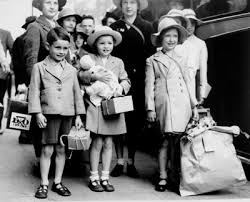
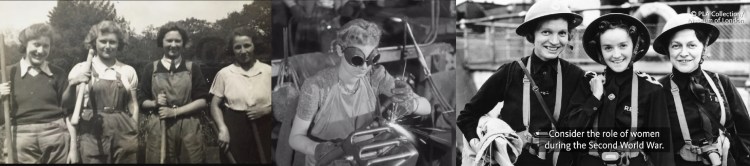

Despite the danger and deprivations, there was a great and genuine community spirit in wartime Britain which often transcended class and other barriers. But there was also an almost universal feeling, that after victory the country could not go back to pre-war social conditions. For starters, women had stepped up to the demands for them to take on ‘men’s work’ in factories, offices, and out in the fields. Many women learned to drive to help with ambulances and fire engines, and some even flew planes (mostly transporting between airfields). VE Day found Britain exhausted, drab and in poor shape, but proud of its unique role in gaining the Allied victory.
In 1948, four years after the war ended, the state of play looked like this:
- People often lived in the same town all their lives, near their families and there were often more than three children in every family.
- One third of the British population went to the cinema at least once a week , other regular entertainment saw church halls and ballrooms packed with people dancing to swing music or attending concerts of classical, jazz and big band music.
- There were only 14,500 television sets in the whole country and there was only one channel (BBC). Hardly any homes had a television and most families listened to the wireless (radio) for their entertainment.
- A quarter of British homes had no electricity. Many homes did not have a washing machine, telephone or an indoor toilet. With no central heating, coal fires heated the main living rooms. Fitted carpets were rare, most houses having stone floors downstairs and wooden floors with rugs.
- Cooking was done from scratch using produce grown locally. You could only buy items that were in season and most of what you bought was made or grown in the UK.
- There were only just over a million cars on Britain’s roads. Petrol rationing remained until 1954. For most people, this made the car an unaffordable luxury. Most people used public transport to get around. Air travel was mainly for the rich. To go abroad, most people travelled by ship.
- The average weekly wage was £3 18s (£3.90). Now it is about £600 (2023)
- The National Health Service was set up.
 JRo Author