I remember the first time I really started noticing cars – I would have been around 15 or 16 and the guy living in the first house on our road built himself a red kit-car. It was the coolest thing ever.
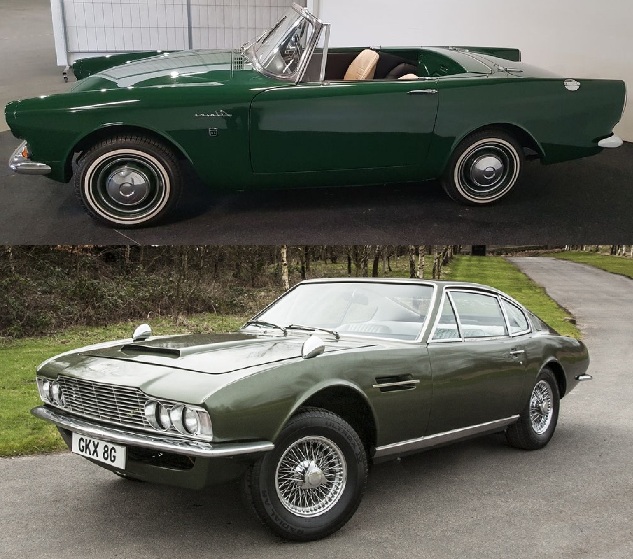
Any fan of James Bond movies will appreciate the emphasis on what he drove, but the very first just happens to be the same as my trend-setting hubby’s first car – a Sunbeam Alpine.
Several websites suggest the quintessential James Bond car was the Aston Martin DB5, known for its gadgets and iconic status. It has been featured in numerous films, including Goldfinger, Thunderball, and Casino Royale.
Here are some of the sporty ones which caught my eye.
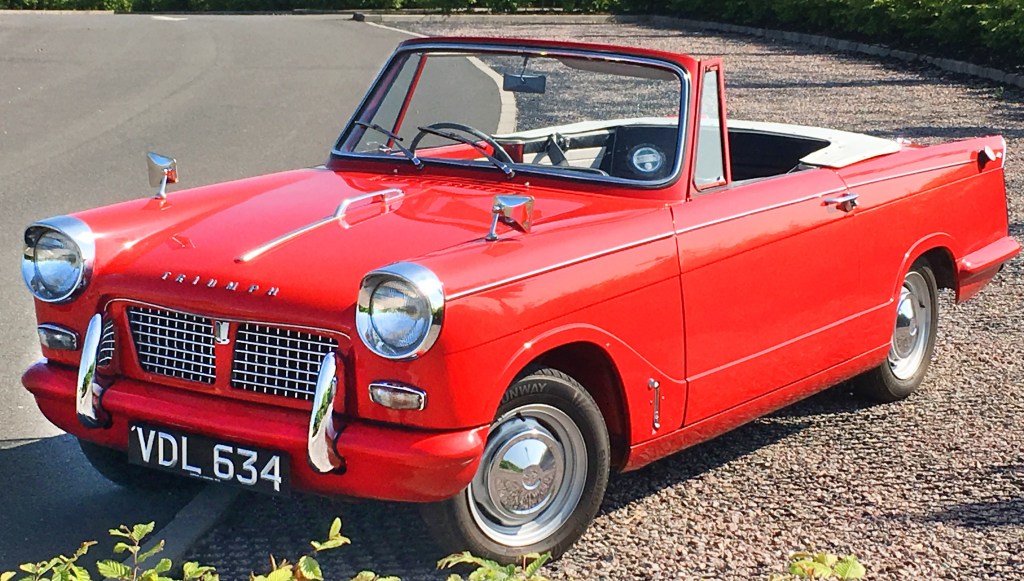
Triumph Herald (1959-71)
The Herald – alongside the Mini and the Ford Anglia – was a British car sensation of 1959. With Michelotti styling, and a slightly elevated price tag, the Herald soon picked up an enthusiastic following – and all that really held it back was the lack of power. In 1960, the convertible was launched, and that received a twin-carb version of the engine. This was retrospectively fitted to the saloon to perk it up a little.
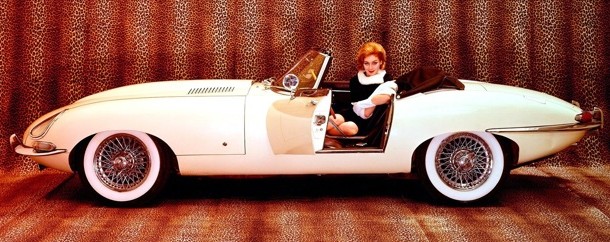
Jaguar E-type (1961 – 1975)
Although automotive styling is subjective, the one vehicle that seems to top more opinion polls naming the most beautiful car in the world, the Jaguar E-type. Styled mainly by Malcolm Sayer, the coupe and roadsters caused a sensation when unveiled in 1961. The E-type redefined the way we viewed sports cars, and how little it could cost to buy a 150mph car (it cost £2098, when an Aston Martin DB4 was over £5000). In 1971, the E-type received an upgrade – Jaguar’s first production V12-powered car, designed for maximum smoothness. Maximum speed was shy of 150mph, and fuel consumption was atrocious going into the 1973 energy crisis.
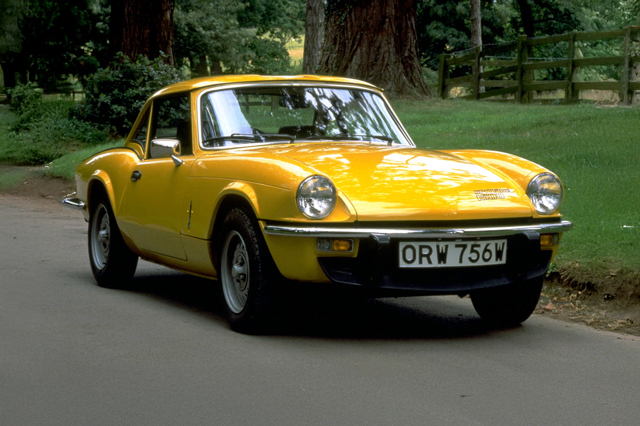
Triumph Spitfire (1962-1980)
The Triumph Spitfire came about as a direct response to the release of the Austin-Healey Sprite (and subsequently MG Midget). Just as with the TRs before it, Triumph found itself playing catch-up to Abingdon, and ended up producing a sports car to answer its rival, but which eventually improved on it in many significant ways. The Spitfire was underpinned by a Herald-style separate chassis, and was powered by the same family of engines. It was a lovely-looking sports car, with Michelotti-penned styling and a closely-cropped interior for two. Fun to drive, and somehow more appealing than the MG Midget.
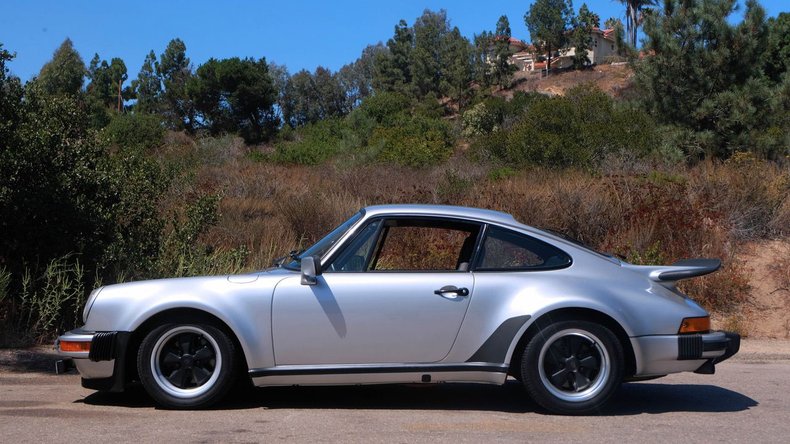
Porsche 911 (1963 – 1993)
The Porsche 911 is an enduring success which, aside from a few wobbles in the late 1970s, sold strongly throughout its life, despite being a 2rear-engined in a front-engined world. In 1964, when the 911 2.0 went on sale, it was a gamble for its maker, going upmarket and wearing a smart set of clothes styled by Butzi Porsche. The first car was powered by a new air-cooled flat-six 2.0-litre engine, nicely tuned to 130bhp. In August 1968, a new and lengthened B-series body was added to the range. The rear wheels moved back by 61mm to lengthen the wheelbase, add interior room and make the handling more stable. 1974 saw the introduction of calmer engines – that produced lower power but more torque – which were fuel injected by Bosch for smoother, cleaner and more economical running.
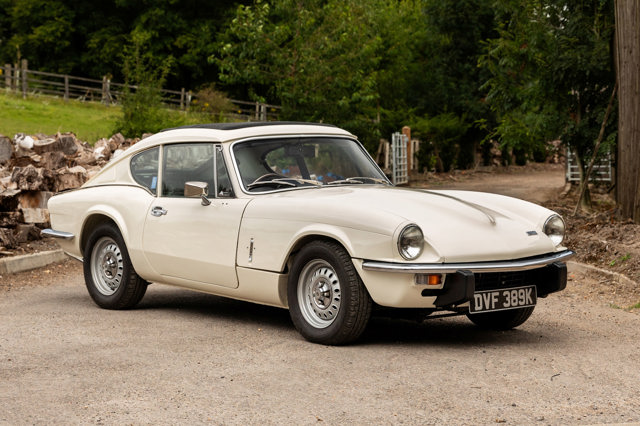
Triumph GT6 (1968-1973)
The Triumph GT6 was originally designed as a four-cylinder GT counterpart to the Spitfire. But when the first prototypes started running, and Triumph engineers realised that the coupe was somewhat slower than the roadster, they fitted the straight-six engine as used in the 2000 and Vitesse. A stylish car, with the added appeal of an E-type-style bonnet bulge, it looked worth every penny. The Mk3 GT6, launched in 1970, received the same visual changes as the Spitfire Mk4. They turned a stylish car into a desirable one – not easy when you consider it was based on an eight-year old car.
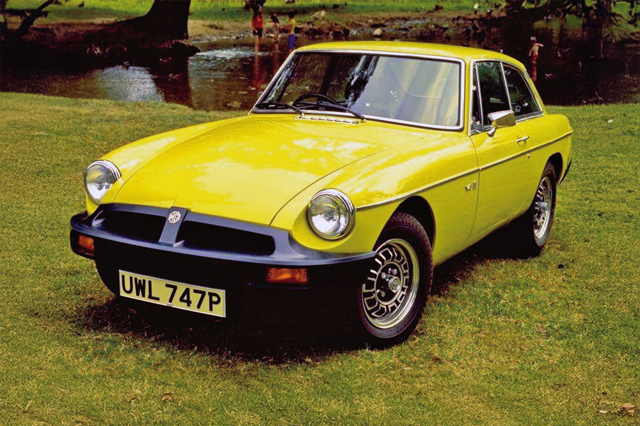
MG MGB GT V8 (1973 – 1976)
MG missed the boat with the ‘B GT V8. At the time it was perfecting the MGC and trying to turn it into a successful Austin Healey 3000 replacement, Ken Costello had been making a good living converting MGBs to Rover V8 power. It was a logical car – and one that delivered all of the MGB’s potential. By the time the MGB GT V8, the world had changed, and it had hit all manner of obstacles, despite having all the ingredients for success. For one, its launch coincided with the 1973 energy crisis – a time when fuel rationing was a very real threat, and the price of fuel was going through the roof. In one fell swoop, the demand for big-engined cars like the ‘B GT V8 fell through the floor – a shame, because the ‘B GT V8 was a great car.
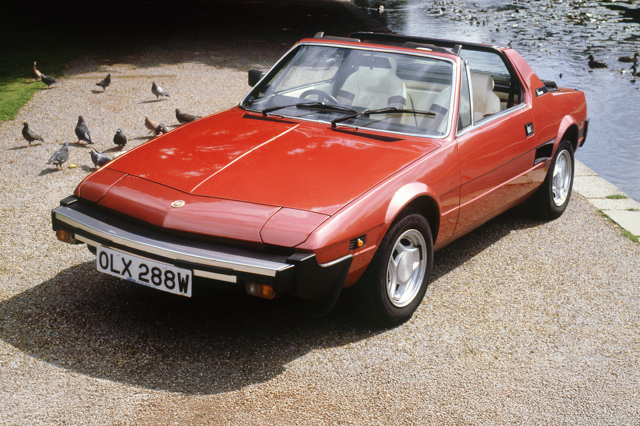
Fiat X1/9 (1977-89)
The Fiat X1/9 has an awful lot going for it as an inexpensive wind-in-the-hair fun car. Although it was launched in Europe in 1972, the UK had to wait five years before right-hand-drive examples became available. Those early cars had 1.3-litre engines and four-speed gearboxes, and were considered somewhat underpowered compared with rivals such as the Triumph TR7. But the X1/9 had balance, poise and style that British sports car buyers could only dream about, but it struggled to crack 100mph until 1978, when the X1/9 received an uprated 1.5-litre engine and five-speed gearbox.
Triumph TR7 (1975-81)
When Triumph launched the TR7, it was a clear signal that the company was making a big change in terms of the direction of the long-lived TR line. The car gained a roof and lost two cylinders, 500cc and independent rear suspension. Triumph had been forced into making it a tin-top on the back of threatened US legislation banning open-topped cars. In the end, that never happened and the convertible TR7 arrived in 1979. But for all the criticism over these points and the wedge styling, it sold faster than the TR6 ever had. It’s a much easier car to live with too, driving more like a two-seater saloon than a sports car. It’s also by far the cheapest way to join the ranks of Triumph TR ownership.
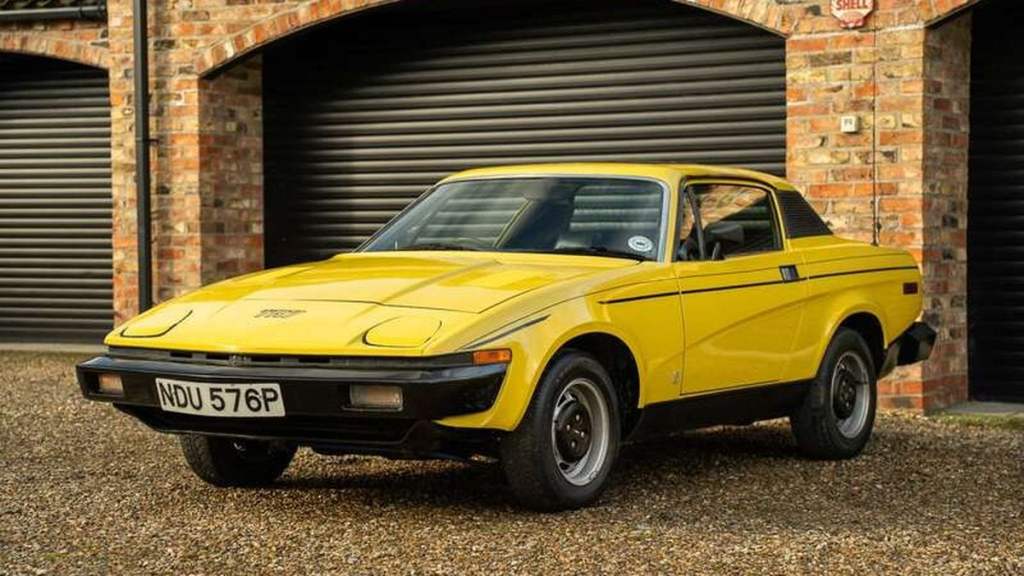
You may notice a teeny-tiny bias toward the Triumph models – just a happy accident.
A huge thank you to Honest John for his spectacular car reviews giving technical detail it would take me weeks to research. https://classics.honestjohn.co.uk/reviews
 JRo Author