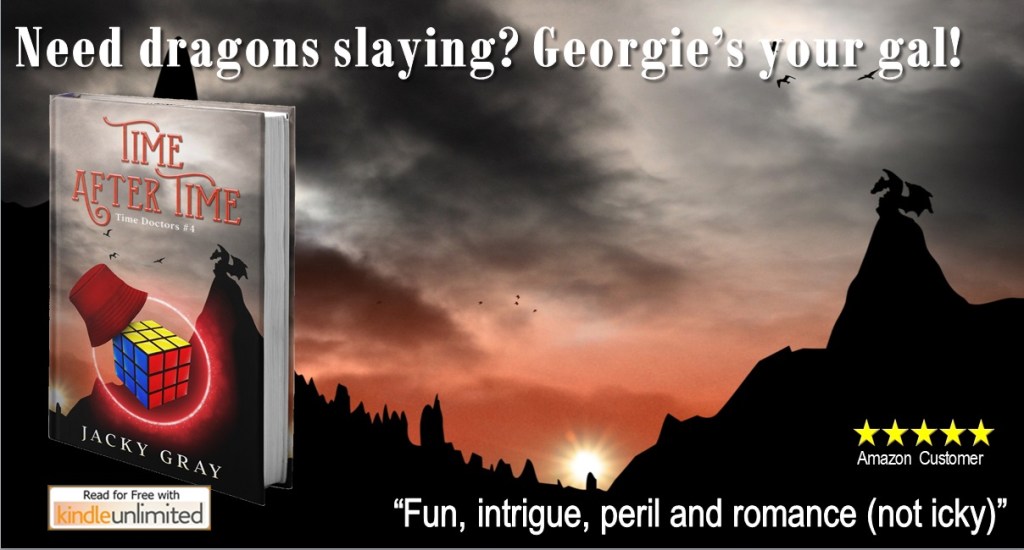
Finally, after months of immersing myself in the whole Dungeons and Dragons world, I get to create a scenario with actual dragons – via Georgie, of course. This is the fourth in the Time Doctors series, and I can’t tell you how many hundreds of pages of rules and all the associated paraphernalia I’ve trawled through since getting the idea last June. This was less than a week after releasing the third book in the Calamity Chicks series. I still hope to write the 4th book, Helen’s Hazard, but not for a while. Watch this space!
The best bit for me was binge-watching Stranger Things and Big Bang Theory (especially the episodes featuring D&D). And I even found a couple of episodes in iZombie where the nerds played – Genius. Hope my quirky spin on dragons will not piss too many people off, but those who know me understand how everything in Jacky-world is very slightly skewed. Never one to churn handles, me.
This will give you a hint of Georgie’s unconventional upbringing: Dragons plagued Georgie her whole life. The clue’s in the name. She’s no saint, so when it’s her turn to be dungeon master, she takes her revenge with a good old-fashioned Dragon-slaying adventure. Well, they do say stick with what you know, huh? But her scenario has startling effects on more than one player in their party. Secrets plagued Kev’s childhood. The kind his parents still don’t talk about for fear of the consequences. After his jaunts to the past unlock long-suppressed dark memories, he has to return to 1988 to solve the mystery surrounding his conception. A little digging leads to some seriously shocking possibilities. Is he strong enough to face the disturbing truth?
You can pick up your copy of Time After Timeby clicking the link – a steal at £2.99/$3.49 or read for free on Kindle Unlimited. Continue the fun adventures of a bunch of 30-something geeks as they explore their familys’ pasts with the aid of a temperamental time capsule in the attic. Although it can be read as a standalone, reading the other three first will give insight into the complicated relationships between them.
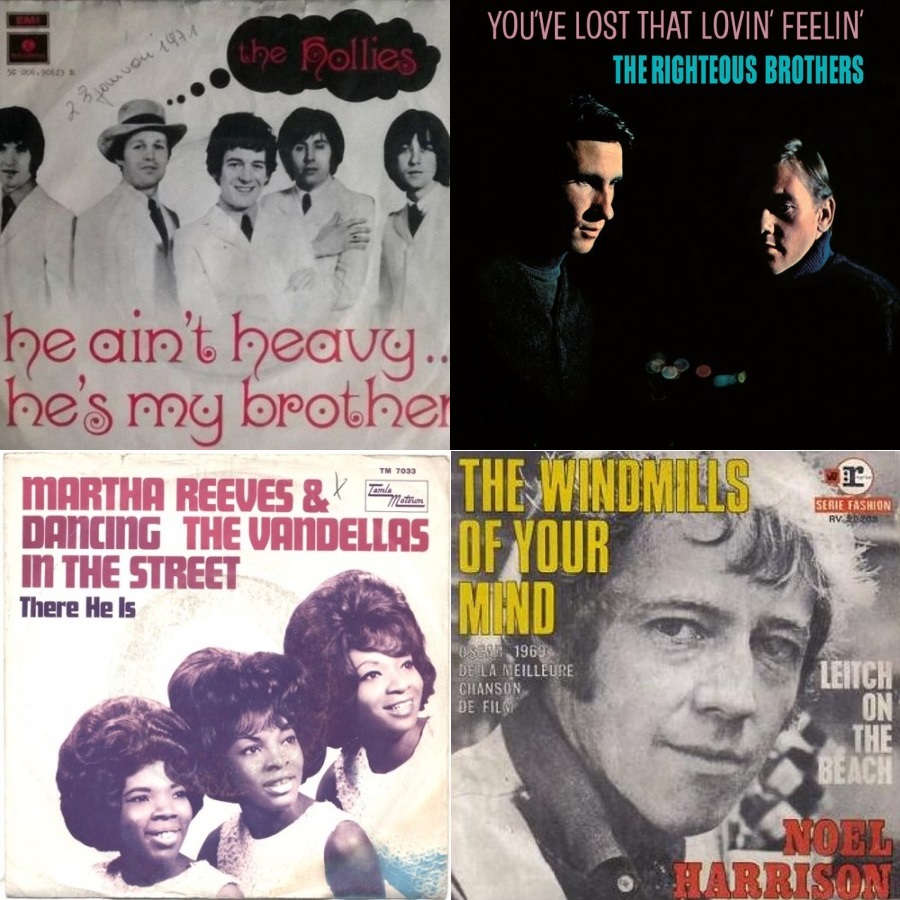
1. The Hollies – He Ain’t Heavy, He’s My Brother- 10-69
2. Noel Harrison – Windmills Of Your Mind- 04-69
3. Martha & The Vandellas – Dancing In The Street – 02-69
4. The Righteous Brothers – You’ve Lost That Lovin’ Feelin’ – 03-69
5. Smokey Robinson & The Miracles – The Tracks Of My Tears – 06-69
6. Blue Mink – Melting Pot – 12-69
7. Marvin Gaye – I Heard It Through The Grapevine – 03-69
8. Simon & Garfunkel – The Boxer – 05-69
9. Thunderclap Newman – Something In The Air – 06-69
10. Jethro Tull – Living In The Past – 06-69
11. The Who – Pinball Wizard- 04-69
12. David Bowie – Space Oddity- 10-69
13. The Archies – Sugar Sugar – 10-69
And here are the ones which didn’t make the cut. Amen Corner – (If Paradise Is) Half As Nice – 02-69 The Beach Boys – I Can Hear Music – 04-69 The Beatles – Something / Come Together – 11-69 Jane Birkin & Serge Gainsbourg – Je T’Aime…Moi Non Plus – 09-69 Glen Campbell – Wichita Lineman – 03-69 Johnny Cash – A Boy Named Sue – 09-69 Jimmy Cliff – Wonderful World Beautiful People – 11-69 Joe Cocker – Delta Lady – 11-69 Creedence Clearwater Revival – Proud Mary – 07-69 Desmond Dekker & The Aces – Israelites – 04-69 Bob Dylan – Lay Lady Lay – 10-69 The Edwin Hawkins Singers – Oh Happy Day – 06-69 The Fifth Dimension – Aquarius/Let The Sunshine In (Medley) – 05-69 Fleetwood Mac – Oh Well – 10-59 Rolf Harris – Two Little Boys – 12-69 The Isley Brothers – Behind A Painted Smile – 05-69 The Love Affair – Bringing On Back The Good Times – 08-69 Lulu – Boom Bang-A-Bang – 04-69 Dean Martin – Gentle On My Mind – 03-69 The Move – Blackberry Way – 01-69 Kenny Rogers & The First Edition – Ruby, Don’t Take Your Love To Town – 11-69 The Rolling Stones – Honky Tonk Women – 07-69 Diana Ross & The Supremes & The Temptations – I’m Gonna Make You Love Me – 02-69 Peter Sarstedt – Where Do You Go To My Lovely – 02-69 Jackie Wilson – (Your Love Keeps Lifting Me) Higher And Higher – 06-69 Stevie Wonder – Yester-Me, Yester-You, Yesterday – 11-69 Zager & Evans – In The Year 2525 (Exordium & Terminus) – 08-69 Roger Whittaker – Durham Town (The Leavin’) – 12-69
That should give you a clue. My mate Caroline and I had been planning the day for ages, it involved her driving to my place for a scrummy meal, then we’d get a train to New street, and a tram to Edgbaston which should be a short walk away from the place. It seems the universe had other plans involving a couple of dodgy tyres, a childcare malfunction, my abhorrance of driving around Birmingham and – well, I don’t have to explain about how easy it is to misread a map, do I?
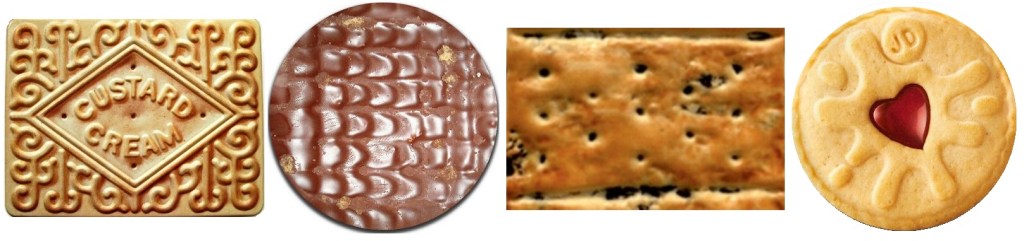
Anyway, I turned up late and missed nearly all of the introductions, but I got there in time for the fun stuff about biscuits – each author had spoken of various favourite things, and they put the vote to the audience about which was our favourite. The four choices were: Custard Creams, Chocolate digestive, Garibaldi and Jammie Dodgers – which way would you vote? Could you match the biscuit to the author?
At the end of this post, there’s a little more about each of these awesome guys to help you make your decision.
But after that ignominious start, the whole thing turned into simply the best author event I’ve ever been to (and I’ve been to quite a few), with four genuinely nice guys sharing a bunch of good stuff about their writing journeys. They gave stacks of rock-solid advice to the many aspiring writers in the audience, and there were absolutely no dull bits where you just wanted people to get on with it. I was thrilled to speak to all four during the break and confess to fan-girling when I got a couple of hugs. Just wish I could have stayed for the after-show party, but the last train wasn’t gonna wait. Here’s a little bit about each of them.
Keith A Pearson
A self-professed writer of vaguely believable novels with a mix of humour, intrigue & general weirdness. For me, The Strange Appeal of Dougie Neil is one I’ll be reading at least once a year from now on.
Check out his website – www.keithapearson.co.uk
His most popular character is the politically-incorrect Clement – a double-denim wearing gangland fixer who claims he died in 1975, and now spends his days seeking redemption whilst struggling to cope with twenty-first-century life.
Adam Eccles
All of his novels are winners, especially the fabulous game-based System Restored, but the most recent release, Frequency Shift, involving Bletchley Park, is definitely in my top ten books of all time. Check out his website – www.adamecclesbooks.com
A cynical tech-nerd hermit, Adam’s lived in the west of Ireland for the last twenty five years.
With long career in technology, he’s an avid time-travel fan as well as having a life-long love of comedy, and you can find elements of all these things in his stories.
Adrian Cousins
The popular Jason Apsley series is currently awaiting the fifth release, but my favourite is definitely the fabulous force of nature that is Deanna – in a fun-packed trilogy featuring a ghostly duo righting wrongs. Check out his website – www.adriancousins.co.uk
Having served his time in retail management (Sainburys proper lost out when he retired), Adrian is now the author of believable, witty time travel novels – with dollops of humour, a smattering of romance, and liberally sprinkled with mystery.
Jason Ayres
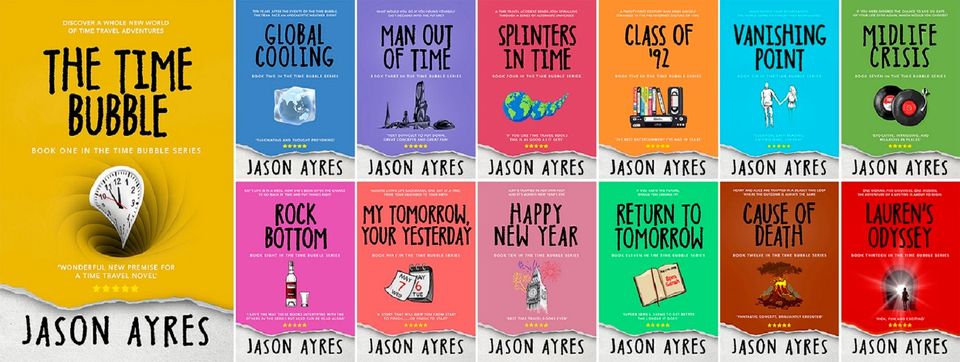
The thirteen books in the popular Time Bubble series include travelling both forwards and backwards, exploring changes in the timeline via the multiverse, and offering people second chances in life. My personal favourite was Rock Bottom – it was good to finally read the circumstances leading to Kay’s predicament, and who doesn’t love a redemption story or a strong female character? This one had both. Check out his website – www.jasonayres.co.uk
Jason left a career in market research to be a journalist, and has subsequently written a stack of humorous novels with science fiction elements, including time travel and alternate realities. A podcaster and ex-DJ, his love of food led to a stint as Britain’s official sausage taster a decade ago.
And now, a shameless plug (as my mate JA Andrews would say) for my own TT series. Because I can never stick to one genre (blame being borderline on the spectrum!) I’ve mashed it up with Big Bang Theory, Dungeons & Dragons and a hint of Stranger Things. Anyway, from now till the end of October when book 4 comes out, the first three are all offered at discounts – more in the next post. The first book, Time and Time Again, is only on offer for a couple of days before returning to full price.
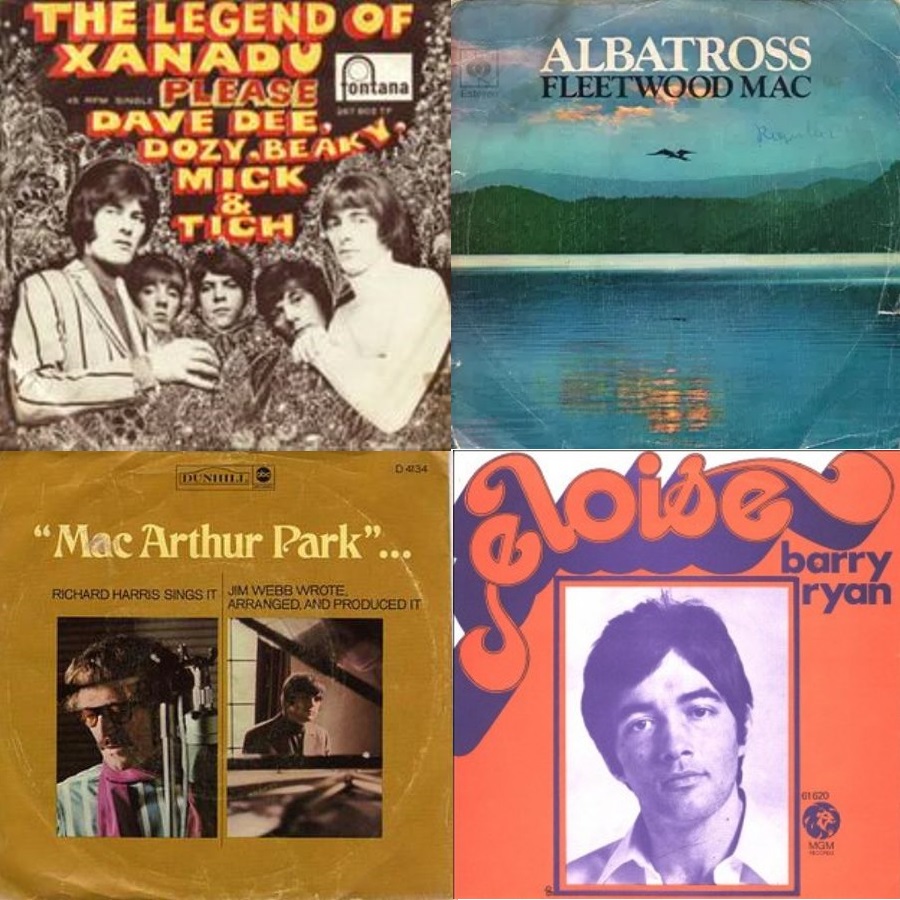
1. Dave Dee, Dozy, Beaky, Mick & Tich – Legend Of Xanadu – 03-68
2. Fleetwood Mac – Albatross – 12-68
3. Richard Harris – MacArthur Park – 07-68
4. Barry Ryan – Eloise – 11-68
5. Aretha Franklin – I Say A Little Prayer – 08-68
6. Joe Cocker – With A Little Help From My Friends – 11-68
7. Tom Jones – Delilah – 03-68
8. Mama Cass – Dream A Little Dream Of Me – 09-68
9. The Small Faces – Lazy Sunday – 05-68
10. Scott Walker – Joanna – 05-68
11. Andy Williams – Can’t Take My Eyes Off You – 04-68
12. Mason Williams – Classical Gas – 09-68
13. Gary Puckett & The Union Gap – Young Girl – 05-68
And the ones which didn’t quite make the cut: Dionne Warwick – Do You Know The Way To San José – 06-68 The Jimi Hendrix Experience – All Along The Watchtower – 11-68
The Foundations – Build Me Up Buttercup -12-68 O.C. Smith – Son Of Hickory Holler’s Tramp – 06-68 Dusty Springfield – I Close My Eyes And Count To Ten – 07-68 Status Quo – Pictures Of Matchstick Men – 02-68 The Move – Fire Brigade – 02-68 Simon & Garfunkel – Mrs. Robinson – 07-68 Esther & Abi Ofarim – Cinderella Rockafella – 02-68 Bobby Goldsboro – Honey – 05-68 Scaffold – Lily The Pink – 11-68 The Tremeloes – Suddenly You Love Me – 02-68 The Kinks – Days – 08-68 The Four Tops – If I Were A Carpenter – 03-68 John Fred & His Playboy Band – Judy In Disguise (With Glasses) – 01-68 Herman’s Hermits – Sunshine Girl – 08-68 The Hollies – Jennifer Eccles – 04-68 The Honeybus – I Can’t Let Maggie Go – 04-68 Mary Hopkin – Those Were The Days – 09-68 Jacky – White Horses – 05-68 Manfred Mann – My Name Is Jack – 07-68
1960s Prices
One pound in 1960 was quite a bit of money. The average manual worker made £14 in a week. 30 shillings (£1.50) would feed the average person for a week. In today’s money one pound in 1960 is about £29.
People were a lot poorer in the 1960s. The average weekly pay packet was less than £10 per week. Allowing for inflation that is £150 in today’s money. Today average weekly earnings are more than £600.
Houses were a lot cheaper in the 1960s than today. In the first quarter of 1960, an average house cost £2,189 (£33,000 in today’s money).
In the last quarter of 1969, an average house cost £24,312 (£47,500 in today’s money). House prices rose faster than inflation in the 1960s. They were still much more affordable than today. Lenders were more cautious. Banks and building societies lent smaller multiples of income and would only consider a husband’s income, not his wife’s.
The average UK house price was £288,000 in June 2023.
The Daily Mirror was Britain’s most popular paper in the 1960s. The Daily Express came second and the Daily Telegraph third. The UK Government’s Prices and Incomes Board controlled the prices of newspapers in the 1960s. Newspaper circulation has halved since the 1960s. Newspapers have to compete with online sources of news.
Although I was only seven, music was very firmly a part of my life, and I have really strong memories of so many songs, particularly the almost-novelty ones like Excerpt From A Teenage Opera, Happy Jack, Ha Ha Said The Clown and especially Simon Smith & His Amazing Dancing Bear. But there were several more conventional hits which still stand up today.
1. The Move – Flowers In The Rain – 09-67
2. The Monkees – I’m A Believer – 01-67
3. Procol Harum – A Whiter Shade Of Pale – 06-67
4. Aretha Franklin – Respect – 07-67
5. The Small Faces – Itchycoo Park – 09-67
6. Traffic – Hole In My Shoe – 09-67
7. The Supremes – The Happening – 06-67
8. The Four Tops – Walk Away Renee – 12-67
9. Nancy & Frank Sinatra – Somethin’ Stupid – 04-67
10. Cliff Richard – The Day I Met Marie – 09-67
11. Petula Clark – Don’t Sleep In The Subway – 07-67
12. Sandie Shaw – Puppet On A String – 04-67
13. Dave Dee, Dozy, Beaky, Mick & Tich – Zabadak – 10-67
And so, so many which nearly made the cut. Keith West – Excerpt From A Teenage Opera – 09-67 The Who – Happy Jack – 01-67 Manfred Mann – Ha Ha Said The Clown – 04-67 The Alan Price Set – Simon Smith & His Amazing Dancing Bear – 03-67 Jeff Beck – Hi-Ho Silver Lining – 05-67 The Kinks – Waterloo Sunset – 05-67 The Bee Gees – Massachusetts – 10-67 The Beatles – Penny Lane / Strawberry Fields Forever – 02-67 The Flowerpot Men – Let’s Go To San Francisco – 09-67 Engelbert Humperdinck – Release Me – 02-67 Paul Jones – I’ve Been A Bad Bad Boy – 02-67 The Mamas & The Papas – Dedicated To The One I Love – 05-67 Scott McKenzie – San Francisco (Be Sure To Wear Some Flowers In Your Hair) – 07-67 The Tremeloes – Even The Bad Times Are Good – 08-67 Stevie Wonder – I Was Made To Love Her – 08-67 The Young Rascals – Groovin’ – 06-67 The Troggs – Love Is All Around – 11-67 The Spencer Davis Group – I’m A Man – 02-67 Cat Stevens – Matthew And Son – 01-67 The Tremeloes – Silence Is Golden – 05-67 The Monkees – Daydream Believer – 12-67 The Seekers – Georgy Girl – 03-67 The Jimi Hendrix Experience – Purple Haze – 04-67 Bobby Gentry – Ode To Billie Joe – 10-67 The Turtles – Happy Together – 04-67 The Four Tops – Bernadette – 04-67 The Johnny Mann Singers – Up Up And Away – 08-67 The Foundations – Baby, Now That I Found You – 10-67 Engelbert Humperdinck – The Last Waltz – 09-67
The early 60s saw the exaggerated cat eye and full red lip continue. Eyebrows were shaped into subtle peak instead of a high curve. Pink blush was subtle and almost non-existent. • Powder – Flesh tone. • Blush – Soft rose pink. • Eye Shadow – White-pink, purple, light blue, aqua. • Eye Liner – Dark brown or black, top and bottom lined and extended outwards. • Lipstick – Deep pink, orange-red. • Eyebrows – Shaped into a soft peak.
The babydoll look was “in” in the mid 60s. Pale white skin, white lips, bold black eyeliner and heavy eyeshadow made it distinct and dramatic. It was a stark contrast to the girly look of clothing until the mid ’60s, when a layer of childishness was added. Eyes were exaggerated with extra long lashes, shimmer eyeshadow, arched brows, light spot blush, and lips turned to a baby pink pout. Looking back, the combination was a scene from a child-meets-ax-murderer horror movie. • Powder – Pale, almost white. • Blush – Warm brown/bronze sculpted the cheeks under the cheekbone. • Eye Shadow – Frosty-pink, green, blue. • Eye Liner – Dark brown or black. • Lipstick – Peach, shimmer pink outlined in a darker lip liner. Slightly overdrawn in the top corners. • Eye lashes – Add fake eyelashes to top and bottom. • Eyebrows – Natural and feathered.
For deep skin tones, the pasty white look wouldn’t work, but the other shaping and drawing techniques would still apply. The goal was to create a face that glowed, with dramatic eyes and full lips. • Powder – Matching skin tone. Foundation: matte. • Blush – Warm brown/bronze sculpted the cheeks under the cheekbone. Lighter bronze on the cheek apple, nose and chin. • Eye Shadow – Dark pink, green, blue. • Eye Liner – Black. • Lipstick – Deep pink, peach, shimmer pink, red-pink, nude. • Eye lashes – Add fake eyelashes to top and bottom. • Eyebrows – Arched in the early years. Peaked in the later years.
The late 60s hippie makeup was the opposite of the Mods (although 1966-1968 hippies wore the mod look.) All natural was the way to go, although many women couldn’t quite adjust to wearing nothing. Instead, they opted for light brown mascara and a clear gloss lip. Face powder was used sparingly as well as a blusher. • Powder – None or matching skin tone • Blush – Light pink-brown blush on apples • Eye Shadow – Skintone colors • Eye Liner – Top lash brown • Lipstick – Clear lip gloss or a touch of light pink • Eye lashes – Light mascara • Eyebrows – Arched naturally
1. The Beach Boys – Good Vibrations – 11-66
2. The Bachelors – The Sound Of Silence – 04-66
3. The Mindbenders – A Groovy Kind Of Love – 02-66
4. The Walker Brothers – The Sun Ain’t Gonna Shine Anymore – 03-66
5. Ike & Tina Turner – River Deep Mountain High – 06-66
6. The Four Tops – Reach Out I’ll Be There – 10-66
7. Manfred Mann – Pretty Flamingo – 04-66
8. Herman’s Hermits – No Milk Today – 10-66
9. The Hollies – Stop Stop Stop – 10-66
10. Tom Jones – Green Green Grass Of Home – 11-66
11. The Kinks – Sunny Afternoon – 06-66
12. The Lovin’ Spoonful – Summer In The City – 08-66
13. The Easy Beats – Friday On My Mind – 12-66
And bubbling under: Dave Dee, Dozy, Beaky, Mick & Tich – Bend It – 10-66 Nancy Sinatra – These Boots Are Made For Walkin’ – 02-66 Cher – Bang Bang (My Baby Shot Me Down) – 04-66 The Supremes – You Can’t Hurry Love – 09-66 Cilla Black – Alfie – 04-66 Frank Sinatra – Strangers In The Night – 05-66 The Rolling Stones – Paint It Black – 05-66 Dusty Springfield – You Don’t Have To Say You Love Me – 04-66 Percy Sledge – When A Man Loves A Woman – 06-66 The Beatles – Paperback Writer – 06-66 Petula Clark – I Couldn’t Live Without Your Love – 07-66 The Hollies – Bus Stop – 07-66 Paul Jones – High Time – 11-66 The Kinks – Dedicated Follower Of Fashion – 03-66 LosBravos – Black Is Black – 07-66 The Mamas & The Papas – Monday Monday – 05-66 Manfred Mann – Semi-Detached Suburban Mr.James – 11-66 Chris Montez – The More I See You – 07-66 The New Vaudeville Band – Winchester Cathedral – 10-66 Jimmy Ruffin – What Becomes Of The Brokenhearted – 12-66 The Sandpipers – Guantanamera – 10-66 The Seekers – Morningtown Ride-12-66 Simon & Garfunkel – Homeward Bound – 05-66 The Spencer Davis Group – Keep On Runnin’ – 01-66 The Troggs – Wild Thing – 05-66 The Who – Substitute – 04-66
At the start of the 60’s several TV shows were well established, including the following: Opportunity Knocks – talent show where public votes decide winners Dixon of Dock Green – the human side of British policing What’s My Line? – quiz show about occupations This is Your life – biographical documentary Panorama – current affairs programme Emergency Ward 10 – hospital-based soap Come Dancing – dancing competition before Strictly
Every year saw new shows – here are some of them: 1960 Coronation Street – world’s longest running soap
1961 The Avengers – glamorous espionage series, full of sass and British humour Songs of Praise – Christian hymns sung in various churches The Rag Trade – sit-com
1962 Z-Cars – gritty (in its day) police procedural drama The Saint – mystery spy thriller Steptoe and Son – sit-com based in scrap-yard
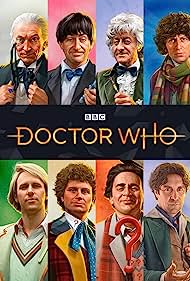
1963 Doctor Who – seminal science fiction drama World in Action – current affairs documentary series
1964 Top of the Pops – chart-based music show Horizon – topical scientific issues The Likely Lads – sitcom set in Liverpool Crossroads – soap set in a Midlands motel Not Only … But Also – comedy sketch show
1965 Thunderbirds – iconic sci-fi puppet show Till Death Us Do Part – sitcom set in East End Tomorrow’s World – contemporary developments in science & technology
1966 Cathy Come Home – documentary about homelessness Softly, Softly – police procedural – spin-off from Z-cars Mission Impossible – spy drama
1967 The Forsyte Saga – tribulations of an upper-class Victorian family Not in Front of the Children – sit-com Never Mind the Quality, Feel the Width – sit-com
1968 Dad’s Army – comic series about the home guard in 1940s Gardener’s World – all things horticultural Please Sir – sit-com set in a school Morecambe and Wise Show – variety show Father Dear Father – sitcom
1969 Monty Python’s Flying Circus – surreal comedy sketch show Benny Hill Show – comedy sketch show Up Pompeii – sit-com set in Rome The Liver Birds – sit-come set in Liverpool On the Buses – sit-com Doctor in the House – sit-com Randall and Hopkirk Deceased – private detective series
1. The Byrds – Mr. Tambourine Man – 07-65 2. The Righteous Brothers – You’ve Lost That Lovin’ Feelin’ – 01-65 3. The Shangri-Las – Leader Of The Pack – 02-65 4. Tom Jones – It’s Not Unususal – 03-65 5. Andy Williams – Almost There – 10-65 6. The Yardbirds – For Your Love – 04-65 7. Sonny & Cher – I Got You Babe – 08-65 8. Unit 4 Plus 2 – Concrete And Clay – 03-65 9. The Walker Brothers – Make It Easy On Yourself – 09-65 10. The Beatles – We Can Work It Out – 12-65 11. The Moody Blues – Go Now! – 01-65 12. Wilson Pickett – In The Midnight Hour – 10-65 13. The Animals – Don’t Let Me Be Misunderstood – 02-65
Fontella Bass – Rescue Me – 12-65 Georgie Fame – Yeh Yeh – 01-65 The Bachelors – Marie – 06-65 The Righteous Brothers – Unchained Melody – 09-65 Jonathan King – Everyone’s Gone To The Moon – 08-65 The Fortunes – You’ve Got Your Troubles – 07-65 The Supremes – Stop! In The Name Of Love – 04-65 Gerry & The Pacemakers – Ferry Across The Mersey – 01-65 Roger Miller – King Of The Road – 05-65 Marcello Minerbi – Zorba’s Dance – 08-65 The Rolling Stones – Get Off Of My Cloud – 11-65 The Seekers – The Carnival Is Over – 11-65 Sandie Shaw – Long Live Love – 05-65 The Who – My Generation – 11-65 The Animals – We Gotta Get Out Of This Place – 07-65 Bob Dylan – Times They Are A-Changin’ – 04-65 Horst Jankowski – A Walk In The Black Forest – 08-65 Billy J. Kramer & The Dakotas – Trains And Boats And Planes – 06-65 Elvis Presley – Crying In The Chapel – 06-65 Dusty Springfield – In The Middle Of Nowhere – 07-65 Them – Here Comes The Night – 04-65 Jackie Trent – Where Are You Now (My Love) – 05-65 The Rolling Stones – (I Can’t Get No) Satisfaction – 09-65
Since WW2 and the following years of rationing, most British household’s preferred way of eating was based on “meat and two veg.” The following are some of the most popular dishes in 1960s UK, top of the list being Sunday roast with chicken, beef, pork or lamb.
Fish fingers Beans on toast Shepherd’s pie Boiled egg and soldiers Bangers and mash Fish and chips Scrambled Egg Beef Stew Pie & chips/mash Pork/lamb chops Steak & kidney pie Toad in the hole Jacket potato (with cheese and beans) Chicken casserole Omelette Cheese toasties Liver & onions
And the more exotic creeping in (especially in dinner parties):
Meatballs
Chicken a la king
Duck a l’orange
Beef Bourguignon
Spaghetti Bolognese
Pigs in blankets
Vol au vents
Shrimp/prawn cocktail
Pineapple and cheese ‘hedgehog’
Fondue
Ritz crackers with Dairylea cheese triangles
Vesta curries and Chow mein
And for afters:
Ambrosia rice pudding
Pineapple upside down cake
Baked Alaska
Tunnel of fudge cake
Mousse (jelly + evaporated milk)
Angel delight/Instant whip
Sherry trifle
Drink Beer was by far the most popular alcoholic drink in the 60s. People generally preferred bitter and increasingly one of the more popular keg brands: Watneys Red Barrel, Double Diamond, Whitbread Tankard or Younger’s Tartan, or pale ale. Lager was gaining popularity in the sixties; the well known brands being Carlsberg, Heineken, Skol or Harp. At home people drank bottled beer rather than cans.
Before the 1960s wine was only drunk by the upper classes. Now Blue Nun, Chianti and Mateus Rose were the wines of choice. Popular French white wines included Chablis, Poully-Fuissé, Macon, White Graves, Sauternes (sweet wine) German wines – Moselle, Hock, Riesling Rosé – Rosé D’Anjou, Mateus Red wines – Bordeaux (Clarets – Médoc or St Emilion) Chianti (the bottles were used to hold candles) Babycham was a favourite with the ladies along with Cinzano, also port and lemon and rum and coke were popular. For spirits, Haig whiskey, VAT 69 and Remy Martin cognac.
Soft drinks included ‘health’ drinks Ribena and Lucozade, and many fizzies, delivered to your door by the “pop man”: Cherryade, Tizer, Wrights lemonade, dandelion and burdock, creme soda and ginger beer. Squash (or cordial) flavours included orange, blackcurrant and lemon barley water. Hot drinks apart from the ubiquitous tea saw instant coffee growing in popularity, and many people ended the day with a milky nightcap of Cocoa, Bournvita, or the gloriously malty Ovaltine and Horlicks.










 JRo Author