1. The Beach Boys – Good Vibrations – 11-66
2. The Bachelors – The Sound Of Silence – 04-66
3. The Mindbenders – A Groovy Kind Of Love – 02-66
4. The Walker Brothers – The Sun Ain’t Gonna Shine Anymore – 03-66
5. Ike & Tina Turner – River Deep Mountain High – 06-66
6. The Four Tops – Reach Out I’ll Be There – 10-66
7. Manfred Mann – Pretty Flamingo – 04-66
8. Herman’s Hermits – No Milk Today – 10-66
9. The Hollies – Stop Stop Stop – 10-66
10. Tom Jones – Green Green Grass Of Home – 11-66
11. The Kinks – Sunny Afternoon – 06-66
12. The Lovin’ Spoonful – Summer In The City – 08-66
13. The Easy Beats – Friday On My Mind – 12-66
And bubbling under: Dave Dee, Dozy, Beaky, Mick & Tich – Bend It – 10-66 Nancy Sinatra – These Boots Are Made For Walkin’ – 02-66 Cher – Bang Bang (My Baby Shot Me Down) – 04-66 The Supremes – You Can’t Hurry Love – 09-66 Cilla Black – Alfie – 04-66 Frank Sinatra – Strangers In The Night – 05-66 The Rolling Stones – Paint It Black – 05-66 Dusty Springfield – You Don’t Have To Say You Love Me – 04-66 Percy Sledge – When A Man Loves A Woman – 06-66 The Beatles – Paperback Writer – 06-66 Petula Clark – I Couldn’t Live Without Your Love – 07-66 The Hollies – Bus Stop – 07-66 Paul Jones – High Time – 11-66 The Kinks – Dedicated Follower Of Fashion – 03-66 LosBravos – Black Is Black – 07-66 The Mamas & The Papas – Monday Monday – 05-66 Manfred Mann – Semi-Detached Suburban Mr.James – 11-66 Chris Montez – The More I See You – 07-66 The New Vaudeville Band – Winchester Cathedral – 10-66 Jimmy Ruffin – What Becomes Of The Brokenhearted – 12-66 The Sandpipers – Guantanamera – 10-66 The Seekers – Morningtown Ride-12-66 Simon & Garfunkel – Homeward Bound – 05-66 The Spencer Davis Group – Keep On Runnin’ – 01-66 The Troggs – Wild Thing – 05-66 The Who – Substitute – 04-66
At the start of the 60’s several TV shows were well established, including the following: Opportunity Knocks – talent show where public votes decide winners Dixon of Dock Green – the human side of British policing What’s My Line? – quiz show about occupations This is Your life – biographical documentary Panorama – current affairs programme Emergency Ward 10 – hospital-based soap Come Dancing – dancing competition before Strictly
Every year saw new shows – here are some of them: 1960 Coronation Street – world’s longest running soap
1961 The Avengers – glamorous espionage series, full of sass and British humour Songs of Praise – Christian hymns sung in various churches The Rag Trade – sit-com
1962 Z-Cars – gritty (in its day) police procedural drama The Saint – mystery spy thriller Steptoe and Son – sit-com based in scrap-yard
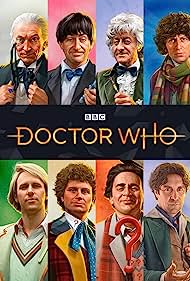
1963 Doctor Who – seminal science fiction drama World in Action – current affairs documentary series
1964 Top of the Pops – chart-based music show Horizon – topical scientific issues The Likely Lads – sitcom set in Liverpool Crossroads – soap set in a Midlands motel Not Only … But Also – comedy sketch show
1965 Thunderbirds – iconic sci-fi puppet show Till Death Us Do Part – sitcom set in East End Tomorrow’s World – contemporary developments in science & technology
1966 Cathy Come Home – documentary about homelessness Softly, Softly – police procedural – spin-off from Z-cars Mission Impossible – spy drama
1967 The Forsyte Saga – tribulations of an upper-class Victorian family Not in Front of the Children – sit-com Never Mind the Quality, Feel the Width – sit-com
1968 Dad’s Army – comic series about the home guard in 1940s Gardener’s World – all things horticultural Please Sir – sit-com set in a school Morecambe and Wise Show – variety show Father Dear Father – sitcom
1969 Monty Python’s Flying Circus – surreal comedy sketch show Benny Hill Show – comedy sketch show Up Pompeii – sit-com set in Rome The Liver Birds – sit-come set in Liverpool On the Buses – sit-com Doctor in the House – sit-com Randall and Hopkirk Deceased – private detective series
1. The Byrds – Mr. Tambourine Man – 07-65 2. The Righteous Brothers – You’ve Lost That Lovin’ Feelin’ – 01-65 3. The Shangri-Las – Leader Of The Pack – 02-65 4. Tom Jones – It’s Not Unususal – 03-65 5. Andy Williams – Almost There – 10-65 6. The Yardbirds – For Your Love – 04-65 7. Sonny & Cher – I Got You Babe – 08-65 8. Unit 4 Plus 2 – Concrete And Clay – 03-65 9. The Walker Brothers – Make It Easy On Yourself – 09-65 10. The Beatles – We Can Work It Out – 12-65 11. The Moody Blues – Go Now! – 01-65 12. Wilson Pickett – In The Midnight Hour – 10-65 13. The Animals – Don’t Let Me Be Misunderstood – 02-65
Fontella Bass – Rescue Me – 12-65 Georgie Fame – Yeh Yeh – 01-65 The Bachelors – Marie – 06-65 The Righteous Brothers – Unchained Melody – 09-65 Jonathan King – Everyone’s Gone To The Moon – 08-65 The Fortunes – You’ve Got Your Troubles – 07-65 The Supremes – Stop! In The Name Of Love – 04-65 Gerry & The Pacemakers – Ferry Across The Mersey – 01-65 Roger Miller – King Of The Road – 05-65 Marcello Minerbi – Zorba’s Dance – 08-65 The Rolling Stones – Get Off Of My Cloud – 11-65 The Seekers – The Carnival Is Over – 11-65 Sandie Shaw – Long Live Love – 05-65 The Who – My Generation – 11-65 The Animals – We Gotta Get Out Of This Place – 07-65 Bob Dylan – Times They Are A-Changin’ – 04-65 Horst Jankowski – A Walk In The Black Forest – 08-65 Billy J. Kramer & The Dakotas – Trains And Boats And Planes – 06-65 Elvis Presley – Crying In The Chapel – 06-65 Dusty Springfield – In The Middle Of Nowhere – 07-65 Them – Here Comes The Night – 04-65 Jackie Trent – Where Are You Now (My Love) – 05-65 The Rolling Stones – (I Can’t Get No) Satisfaction – 09-65
Since WW2 and the following years of rationing, most British household’s preferred way of eating was based on “meat and two veg.” The following are some of the most popular dishes in 1960s UK, top of the list being Sunday roast with chicken, beef, pork or lamb.
Fish fingers Beans on toast Shepherd’s pie Boiled egg and soldiers Bangers and mash Fish and chips Scrambled Egg Beef Stew Pie & chips/mash Pork/lamb chops Steak & kidney pie Toad in the hole Jacket potato (with cheese and beans) Chicken casserole Omelette Cheese toasties Liver & onions
And the more exotic creeping in (especially in dinner parties):
Meatballs
Chicken a la king
Duck a l’orange
Beef Bourguignon
Spaghetti Bolognese
Pigs in blankets
Vol au vents
Shrimp/prawn cocktail
Pineapple and cheese ‘hedgehog’
Fondue
Ritz crackers with Dairylea cheese triangles
Vesta curries and Chow mein
And for afters:
Ambrosia rice pudding
Pineapple upside down cake
Baked Alaska
Tunnel of fudge cake
Mousse (jelly + evaporated milk)
Angel delight/Instant whip
Sherry trifle
Drink Beer was by far the most popular alcoholic drink in the 60s. People generally preferred bitter and increasingly one of the more popular keg brands: Watneys Red Barrel, Double Diamond, Whitbread Tankard or Younger’s Tartan, or pale ale. Lager was gaining popularity in the sixties; the well known brands being Carlsberg, Heineken, Skol or Harp. At home people drank bottled beer rather than cans.
Before the 1960s wine was only drunk by the upper classes. Now Blue Nun, Chianti and Mateus Rose were the wines of choice. Popular French white wines included Chablis, Poully-Fuissé, Macon, White Graves, Sauternes (sweet wine) German wines – Moselle, Hock, Riesling Rosé – Rosé D’Anjou, Mateus Red wines – Bordeaux (Clarets – Médoc or St Emilion) Chianti (the bottles were used to hold candles) Babycham was a favourite with the ladies along with Cinzano, also port and lemon and rum and coke were popular. For spirits, Haig whiskey, VAT 69 and Remy Martin cognac.
Soft drinks included ‘health’ drinks Ribena and Lucozade, and many fizzies, delivered to your door by the “pop man”: Cherryade, Tizer, Wrights lemonade, dandelion and burdock, creme soda and ginger beer. Squash (or cordial) flavours included orange, blackcurrant and lemon barley water. Hot drinks apart from the ubiquitous tea saw instant coffee growing in popularity, and many people ended the day with a milky nightcap of Cocoa, Bournvita, or the gloriously malty Ovaltine and Horlicks.
’64 was a fine vintage for pop music with Beatlemania hitting the US, Top of the Pops debuting on UK TV, and the Rolling Stones having a sucessful US tour. Davie Jones & King Bees released their debut single “I Can’t Help Thinking About Me.” The group disbanded but the lead singer went on to have a long, fabulous career as David Bowie. It was probably the hardest choice yet knowing what to exclude. I’d forgotten how many top tunes there were in 1964.
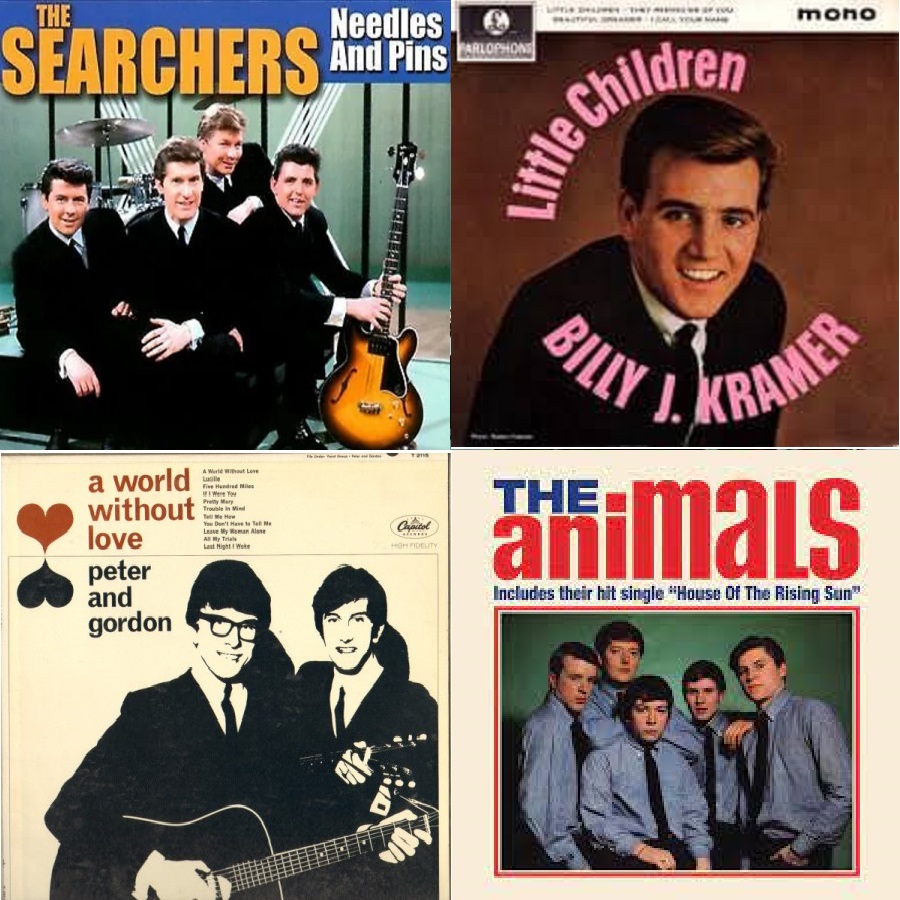
1. The Searchers – Needles And Pins 01-64 2. Billy J. Kramer & The Dakotas – Little Children – 03-64 3. Peter & Gordon – A World Without Love – 04-64 4. The Animals – House Of The Rising Sun – 07-64 5. The Bachelors – Ramona – 06-64 6. Cilla Black – Anyone Who Had A Heart – 02-64 7. Petula Clark – Downtown – 12-64 8. Doris Day – Move Over Darling – 04-64 9. The Dave Clark Five – Bits And Pieces – 02-64 10. The Kinks – You Really Got Me – 08-64 11. Kathy Kirby – Secret Love – 11-63 12. Sandie Shaw – Always Something There To Remind Me – 10-64 13. Dusty Springfield – I Just Don’t Know What To Do With Myself – 07-64
And here’s the ones which make it into the top 13.
Dionne Warwick – Walk On By – 05-64
Dave Berry – The Crying Game – 09-64
The Merseybeats – Wishin’ And Hopin’ – 08-64
Mary Wells – My Guy – 06-64
The Honeycombs – Have I The Right? – 08-64
Manfred Mann – Do Wah Diddy Diddy – 07-64
The Kinks – All Day And All Of The Night – 11-64
The Zombies – She’s Not There – 09-64
The Beatles – A Hard Day’s Night – 07-64
The Shangri-Las – Remember (Walkin’ In The Sand) – 11-64
Freddie & The Dreamers – You Were Made For Me – 11-63
The Beach Boys – I Get Around – 08-64
The Supremes – Baby Love – 11-64
The Hollies – Here I Go Again – 06-64
Dean Martin – Everybody Loves Somebody – 09-64
The Swinging Blue Jeans – The Hippy Hippy Shake – 01-64
Roy Orbison – Oh Pretty Woman – 09-64
The Rolling Stones – It’s All Over Now – 07-64
The Ronettes – Baby I Love You 02-64
Millie – My Boy Lollipop – 04-64
The 1960s saw a dramatic change in menswear – for the past 150 years, clothing for men had been tailor-made, and plain and sombre in appearance. Men’s fashion was generally based on a conservative template people didn’t question: a shirt and tie; a plain, handmade suit; a jumper hand-knitted by a relative. Designer John Stephen opened his first boutique in Carnaby Street in 1957, selling cheap, sharp and colourful suits to men who became an important influence on London’s street style.
Young men dressed much the same way as their fathers did. But in the late 1950s, the Mods (short for ‘Modernists’) signalled the birth of a confident new youth culture, demanding clothes that made a statement. In London, people began wearing clothes heavily influenced by Continental style, specifically Italian slimline suits, with their ‘bumfreezer’ short jackets, and the beatnik looks of the Parisian Left Bank.
As the 1960s gathered pace, the standard template for a man’s suit began to accommodate subtly daring new elements: the collarless jacket (a look popularised by The Beatles in 1963, the year they launched their first album) and slim-fitting trousers, matched with heeled boots rather than shoes. Boutiques selling off-the-peg menswear spread across London, while traditional tailors and shirt-makers began to embrace society’s increasingly informal new mood. Flamboyant elements such as embroidery and vividly printed shirts became acceptable parts of the everyday male dress code. The frenetic energy of Swinging London found its way across the country with bright prints and colours for men – a striking change after such a long period of stagnation. Ties widened as the decade progressed, and shirts incorporated brighter colours and patterns, influenced more by rock stars replacing the movie stars who’d been the primary style icons for several decades.
By the mid-1960s, fashion-conscious young Londoners were challenging the staid rules of masculine etiquette that had persisted since Victorian times. Circulating in the overlapping worlds of fashion, music, the (newly influential) media and high society, a social group forged a bold new identity – the ‘modern dandy’, unashamed to wear frills, velvet and other elements previously judged to be too feminine for a man. A group of entrepreneurs capitalised on this shift in taste, setting up shops that married traditional tailoring techniques with the design flair of graduates from recently established Menswear courses. Around 1963, two distinct subcultures emerged: Mods and Rockers.
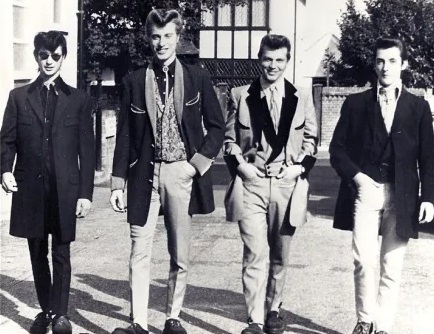
Mods were driven by fashion and music, and many rode scooters. They wore suits and other cleancut outfits, and listened to music genres such as modern jazz, soul, Motown and ska. Also British blues-rooted bands like the Yardbirds, the Small Faces, and the Who, who wrote a portrait of the cultures with their 1973 album Quadrophenia. The Rockers’ life revolved around motorcycling and they generally wore protective clothing such as black leather jackets and motorcycle boots. The style was influenced by Marlon Brando in the 1953 film The Wild One. The common rocker hairstyle was a pompadour, while their music genre of choice was 1950s rock and roll and R&B, played by artists including Eddie Cochran, Gene Vincent, and Bo Diddley, as well as British musicians such as Billy Fury and Johnny Kidd.
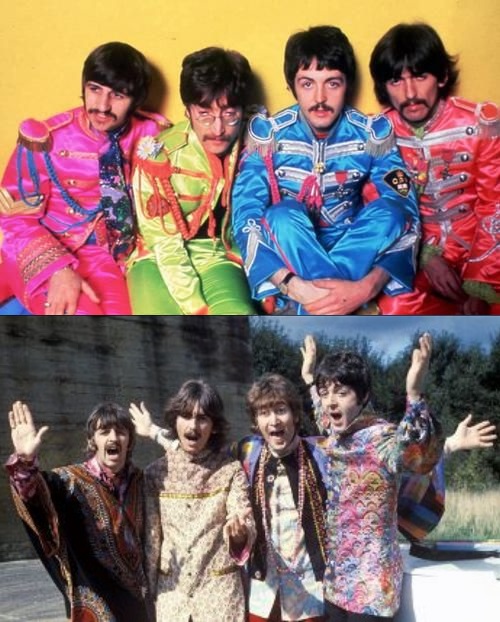
Men’s fashion was influenced by military elements, with many rock influences contributing to its popularity. In 1966, Mick Jagger wore a Victorian guardsman’s jacket during a televised performance on Ready Steady Go! He and Jimi Hendrix both sported military jackets during performances, while The Beatles’ 1967 album Sgt. Pepper’s Lonely Hearts Club Band showed the band wearing neon versions of the styles. Partly thanks to this style, army-and-navy surplus clothing stores and second-hand stores became popular in the late 1960s. Menswear saw an influence from space as Pierre Cardin designed futuristic clothing for men, too. Although his ‘Cosmos’ collection of 1966/7 was too extreme to enter the mainstream, elements of the look such as turtle-neck sweaters, and zipped tunics in bonded jersey, were worn with more accessible styles.
At the end of the decade, violence in Vietnam and student uprisings in France signalled newly aware times, and consumerist enthusiasm for ‘the next new thing’ began to feel inappropriate. A growing interest in historic revival and various cultures encouraged British people to trawl second-hand shops looking for vintage clothes – particularly the fashions of the 1930s and 1940s and men’s suits began to widen again. People sought garments with connections to other parts of the world to create looks through less consumerist means, rejecting the synthetic materials of the earlier part of the decade. Like women’s fashion, menswear turned to Eastern influences, and the boldly patterned suit jacket George Harrison wore in the mid-sixties foreshadowed the style to come.
Tie-dye, loose-fitting shirts, and velvet vests were all a part of the men’s hippie aesthetic in the later part of the 1960s while colour continued to remain front and centre. As the 1960s moved into the 1970s, taking inspiration from the 1930s and 1940s, lapels and trousers took on exaggeratedly wide dimensions, and the traditional distinctions between menswear and womenswear became blurred. Blue denim jeans, at first a counter-cultural garment, were widely worn and promoted by global brands.
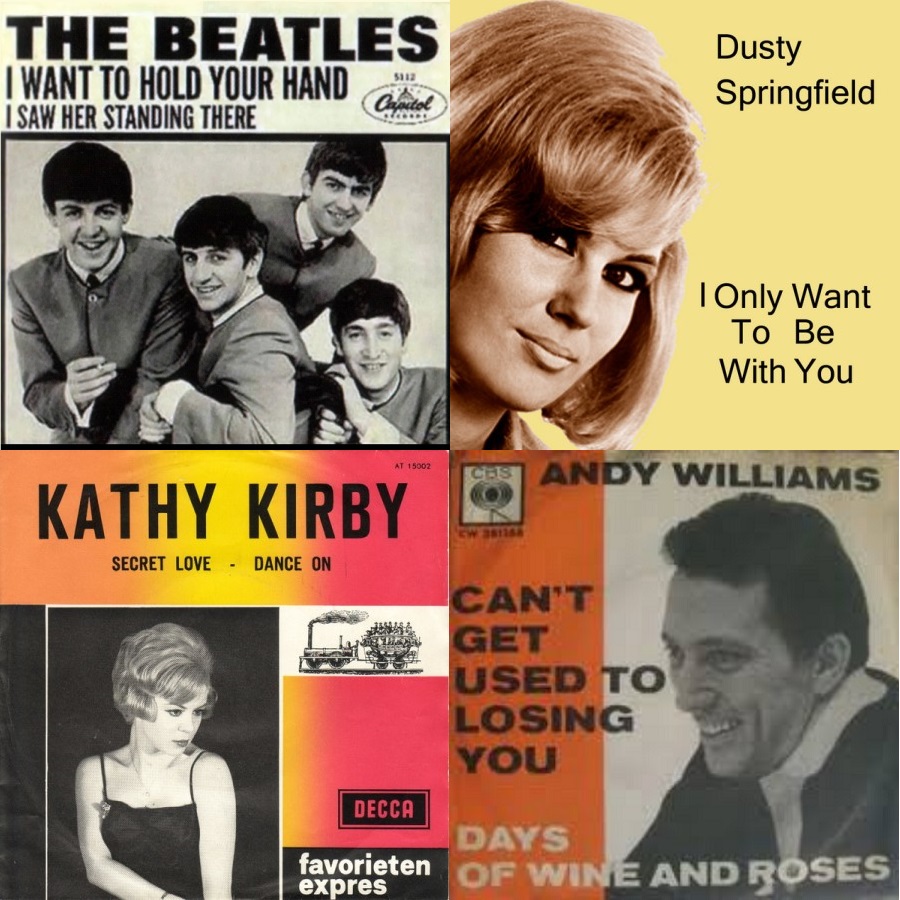
1. The Beatles – I Want To Hold Your Hand – 12-63
2. Dusty Springfield – I Only Want To Be With You – 11-63
3. Kathy Kirby – Secret Love – 11-63
4. Andy Williams – Can’t Get Used To Losing You – 04-63
5. The Dave Clark Five – Glad All Over – 12-63
6. Billy J. Kramer & The Dakotas – Do You Want To Know A Secret – 05-63
7. The Crystals – Then He Kissed Me – 09-63
8. The Bachelors – Charmaine – 03-63
9. The Four Seasons – Big Girls Don’t Cry – 02-63
10. Cliff Richard – Summer Holiday – 02-63
11. Rick Nelson – Fools Rush In – 11-63
12. Gene Pitney – Twenty-Four Hours From Tulsa – 12-63
13. The Chiffons – He’s So Fine – 05-63
And the ones that got away: The Ronettes – Be My Baby – 10-63 Peter, Paul & Mary – Blowin’ In The Wind – 11-63 The Singing Nun – Dominique – 12-63 Gerry & The Pacemakers – You’ll Never Walk Alone – 10-63 The Beatles – She Loves You – 08-63 The Crystals – Da Doo Ron Ron – 06-63 The Springfields – Island Of Dreams – 02-63 The Surfaris – Wipe Out – 08-63 Mel Tormé – Coming Home Baby – 01-63 Bobby Vee – The Night Has A Thousand Eyes – 02-63
This was very much the age of the space-race, with huge investment in the technology required to get a man into space, and many advances in miniaturisation thanks to the first silicon chip.
1960 Artificial sun tanning cream is developed. Jan 1: The USS George Washington, a state-of-the-art nuclear-powered submarine, is commissioned. Apr 1: Tiros 1, the first weather satellite, is launched. May 16: Theodore Maiman used a synthetic ruby to produce a laser. Aug 25: A Halogen Lamp which could fit into a standard lightbulb socket was invented by a general electric engineer, Fredrick Moby.
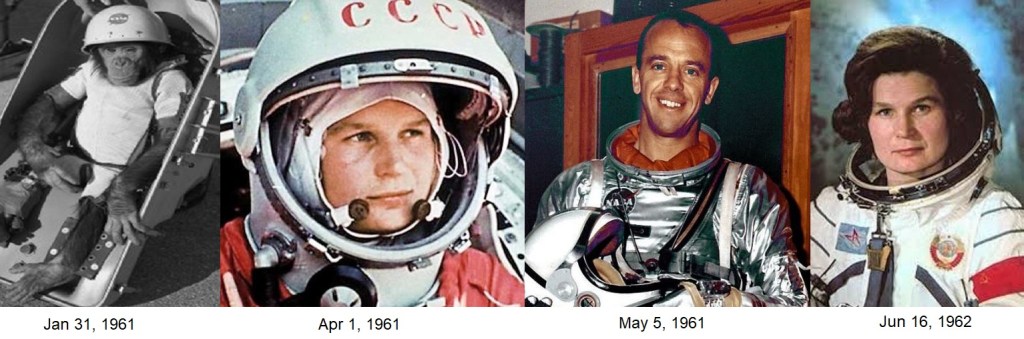
1961 The USS Enterprise aircraft carrier, run by eight nuclear reactors, is commissioned by the US Navy. Jan 31: The National Aeronautics and Space Administration (NASA) launches into space a capsule containing a chimpanzee, and successfully recovers the animal. Feb 6: Texas Instruments files a patent for the first “Solid Circuit” silicon chip used in electronics, invented by Jack Kilby. Apr 1: Cosmonaut Yuri A. Gagarin is the first Russian launched into space. Apr 23: The first industrial robot arm was used in a die-casting factory. Apr 25: The first patent for an integrated circuit awarded to Robert Noyce of Fairchild Semiconductors. May 5: Astronaut Alan B. Shepard Jr. is the first American launched into space
1962 Kelvinator produces a dishwasher that employs high-frequency sound waves, rather than soap and water. Feb 14: Space War Video Game Realeased. This was the first computer game invented by Steve Russell, and the team took 200 hours to write the game. Jun 19: The first compact audio cassette tape released by Philips in the Netherlands. Jun 16: Cosmonaut Valentina V. Tereshkova is the first woman in space. Dec 14: The U.S. scientific space probe Mariner 2 reaches Venus 109 days after its launch.
1963 The USS Atlantis II clearly photographs the ocean floor. Oct 27: Video Disk invented by Dr. David Paul Gregg – a camera which could store several minutes’ worth of images onto an optical video disk.
1964 IBM produces a new product, the word processor, a hybrid of the typewriter and computer. May 1: BASIC (early computer language) invented by John G. Kemeny and Thomas E. Kurtz. Aug 5: Congress establishes the National Commission on Technology, Automation and Economic Progress, to analyze the impact of automation on unemployment.
1965 A computer at the New York Stock Exchange answers questions over the telephone using an artificial voice. Traffic control in Chicago, New York, and Detroit becomes computerized Jan 1: The first soft contact lens (invented by Kevin Tuohy in 1948) available. Feb 17: Ranger 8, a moon probe, blasts off into space and sends back more than seven thousand images of the moon’s surface before crashing into the lunar Sea of Tranquillity. Jul 15: Mariner 4 sends the first close-up photographs of Mars. Aug 5: Kevlar invented by Stephanie Kwolek – five times stronger than the same weight of steel. Aug 17: Compact Disk: the optical digital technology was initially met with scepticism, as people didn’t believe sound could be digitized.
1966 Jun 2: Sorcerer I makes the first soft landing on the moon. July: Fibre Optics proposed in England by Charles Keo and George Hockham. This study first theorized about using glass fibres to implement optical communication, the ideas (especially structural features and materials) described are the basis of today’s optical fibre communications. Sep 1: 1st video game that could be displayed on TV – Television engineer Ralph Baer created “The Brown Box.”
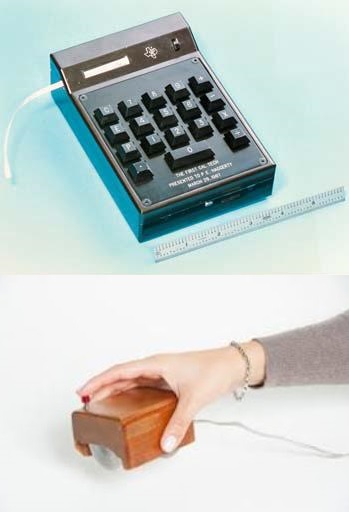
1967 Computer keyboards are developed, allowing immediate access between the operator and the computer. RCA develops a compact television camera weighing just over two pounds. A cordless, battery-powered telephone is developed. A solar-powered house is built. Mar 1: The first overseas direct telephone dialling begins. Aug 25: First Handheld calculator invented by Texas Instruments
1968 Scientists use radar to map the surface of Venus. The picosecond, the smallest period of time detectable, is measured at Bell Laboratories. Jan 1: First RAM chip – random-access memory allowed data to be accessed randomly, not just in the sequence it was recorded. Aug 16: The Poseidon 3, a new missile that can be launched from submarines, is tested. Oct 11: Apollo 7, the first manned Apollo flight, begins a seven-day mission. Dec 9: First computer mouse publicly unveiled in 1968 by the inventor, Douglas C. Engelbart.
1969 William Ducie and Tom Parry Jones developed and marketed the first electronic breathalyser. The Road Safety Act 1967 introduced the first legally enforceable maximum blood alcohol level for drivers in the UK and introduced the roadside breathalyser, made available to police forces across the country. Jan 22: The Atomic Energy Commission announces completion of the world’s largest superconducting magnet. Jul 16: Apollo 11 is launched. This flight culminates in the landing of the first human on the surface of the moon. Sep 2: Fred J. Gentile and Jack Wu Chang invented the ATM network and were recognized by the United States Patent Office. The first ATM in the United States was installed in Rockville Centre, New York. Oct 29: The first documented ARPANET connection was from UCLA to SRI. The ARPANET’s technology and deployment laid the foundation for the development of the Internet. Nov 18: Americans land on the moon for the second time in Apollo 12.
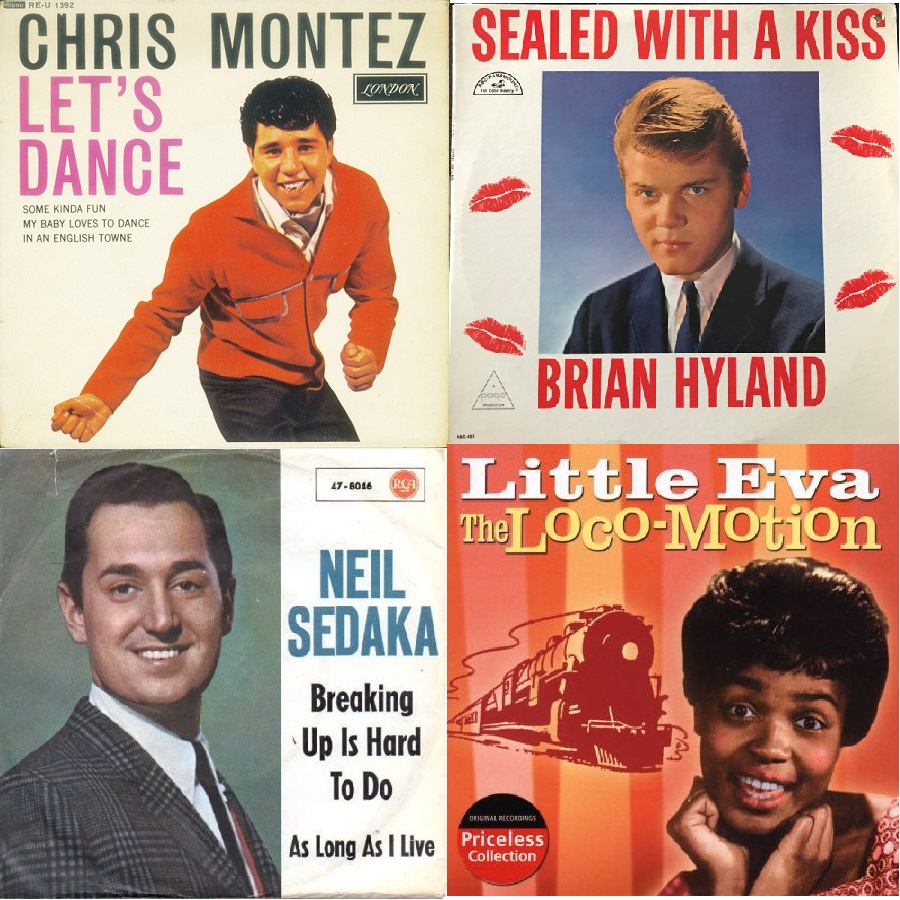
1. Chris Montez – Let’s Dance – 10-62 2. Brian Hyland – Sealed With A Kiss – 08-62 3. Neil Sedaka – Breaking Up Is Hard To Do – 08-62 4. Little Eva – The Loco-Motion – 09-62 5. B. Bumble & The Stingers – Nut Rocker – 04-62 6. Ray Charles – Your Cheatin’ Heart – 12-62 7. Cliff Richard – The Young Ones – 01-62 8. Chubby Checker – Let’s Twist Again – 01-62 9. The Everly Brothers – Cryin’ In The Rain – 01-62 10. The Four Seasons – Sherry – 10-62 11. Dion – The Wanderer – 03-62 12. Elvis Presley – Can’t Help Falling In Love – 02-62 13. Carole King – It Might As Well Rain Until September – 09-62
And the ones that got away: Cliff Richard – Bachelor Boy – 12-62 Brenda Lee – Rockin’ Around The Christmas Tree – 12-62 Ray Charles – I Can’t Stop Loving You – 06-62 Sam Cooke – Twistin’ The Night Away – 03-62 Frank Ifield – I Remember You – 07-62 Bruce Channel – Hey! Baby – 03-62 Bernard Cribbins – Right Said Fred – 07-62 Nat ‘King’ Cole – Let There Be Love – 08-62 Elvis Presley – Return To Sender – 11-62
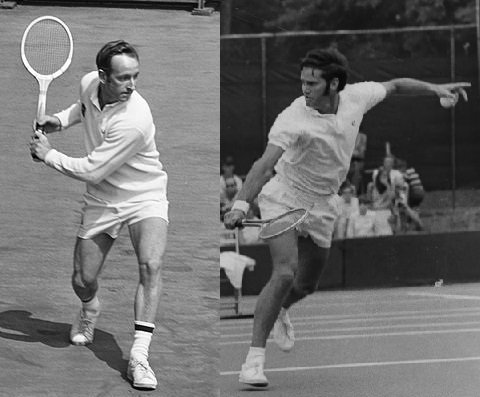
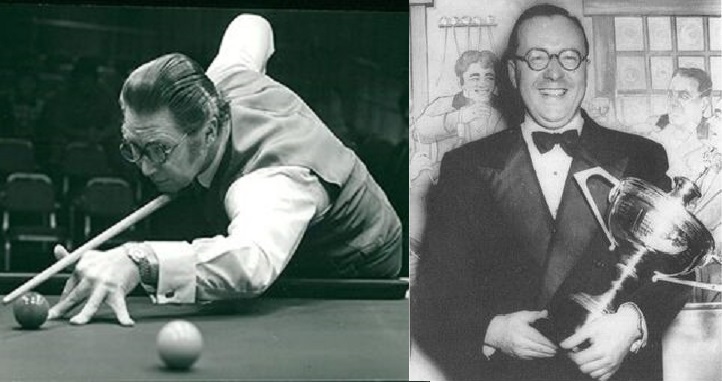
This was definitely the Aussie’s decade when it came to Wimbledon, with an astonishing number of all-Australian singles and doubles finals. The World Snooker Championship, which had been played every year since 1927 (apart from 1941 to 1945 because of World War II) was not held between 1958 and 1963 due to declining interest from players.
1960 The Grand National hit British TV screens live for the first time ever in its 114th year. The steeplechase was won by nine-year-old Merryman II, who, at odds of 13/2, became the first clear favourite to win for 33 years. The Wimbledon all-Australian men’s final saw Neale Fraser beating Rod Laver, and the women’s saw Brazilian Maria Bueno defeat South African Sandra Reynolds. David Broome (Show jumper) was voted Sports Personality of the Year, beating Don Thompson (Athlete).
Aussie Kel Nagle won the British Open Golf Championship, beating American Arnold Palmer. A new Eurovision television circuit meant the Rome Olympics reached a greater worldwide television audience than ever before. While Anita Lonsborough and David Broome won gold for Britain, perhaps the most enduring domestic memory of the games is Don Thompson, who prepared for the heat by training in his bathroom and triumphed in the 50 kilometres walk.
1961 The Wimbledon all-British women’s final saw Angela Mortimer beating Christine Truman, and the men’s saw Aussie Rod Laver defeat American Chuck McKinley. Stirling Moss (Formula One) was voted Sports Personality of the Year, beating Billy Walker (Boxer). American Arnold Palmer won the British Open Golf Championship, beating Welshman Dai Rees.
1962 The Wimbledon all-Australian men’s final saw Rod Laver beating Martin Mulligan, and the women’s saw American Karen Susman defeat Czech Vera Sukova. Anita Lonsbrough (Swimmer) was voted Sports Personality of the Year, beating Dorothy Hyman (Athlete). American Arnold Palmer won the British Open Golf Championship, beating Aussie Bob Charles. England were the only British side to reach the 1962 Football world cup finals. But Brazil knocked them out in the quarter finals and went home with the trophy.
1963 The Wimbledon men’s final saw American Chuck McKinley beating Australian Fred Stolle, and the women’s saw Aussie Margaret Smith defeat American Billie Jean Moffat. Dorothy Hyman (Athlete) was voted Sports Personality of the Year, beating Bobby McGregor (Swimmer). Aussie Bob Charles won the British Open Golf Championship, beating American Phil Rodgers. A left hook from British Boxer Henry Cooper floored Cassius Clay at Wembley in 1963. But Clay was saved by the bell and went on to triumph over Cooper.
1964 The Wimbledon all-Australian men’s final saw Roy Emerson beating Fred Stolle, and the women’s saw Brazilian Maria Bueno defeat Aussie Margaret Smith. World Snooker champion was John Pullman (ENG), who beat Fred Davis (ENG), who had won it 8 times – his brother Joe won 15 times in the 1920s and 30s.
Mary Rand (Athlete) was voted Sports Personality of the Year, beating Barry Briggs (Speedway). Tony Jacklin won the British Open Golf Championship, beating Aussie Bob Charles. Olympic Games in Tokyo. Britain picked up a long jump double with Mary Rand picking up Great Britain’s first ever gold in women’s athletics and Lynn Davies upsetting the form book in the men’s event. Ann Packer matched their achievements with a stunning run in the 800 metres.
1965 The Wimbledon all-Australian men’s final saw Roy Emerson beating Fred Stolle, and the women’s saw Aussie Margaret Smith defeat Brazilian Maria Bueno. Tom Simpson (Cyclist) was voted Sports Personality of the Year, beating Jim Clarke (Formula One). World Snooker champion was John Pullman (ENG), who beat Rex Williams (ENG) and Fred Davis (ENG) in challenge matches. Tony Jacklin won the British Open Golf Championship, beating Welshman Brian Huggett and Irishman Christy O’Connor Snr.
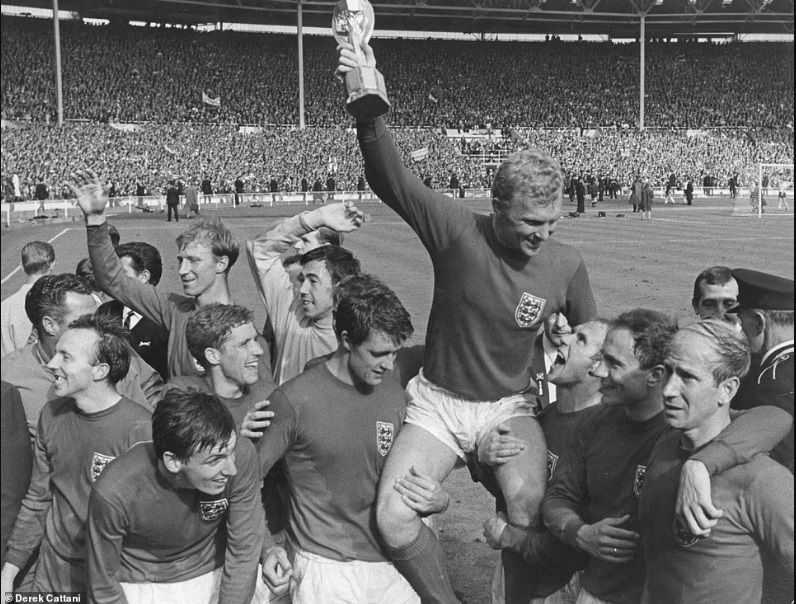
1966 The Wimbledon men’s final saw Spaniard Manuel Santana beating American Dennis Ralston, and the women’s saw American Billie Jean King (nee Moffat) defeat Brazilian Maria Bueno. Bobby Moore (Footballer) was voted Sports Personality of the Year , beating Barry Briggs (Speedway).
World Snooker champion was John Pullman (ENG), who beat Rex Williams (ENG), Fred Van Rensburg (SAF) and Fred Davis (ENG) in challenge matches. American Jack Nicklaus won the British Open Golf Championship, beating American Doug Sanders and Welshman Dave Thomas. Geoff Hurst hit a hat-trick as England clinched their only Football World Cup victory. England beat West Germany 4-2 at Wembley and the nation went wild.
1967 Wimbledon saw the first scheduled UK colour broadcast. The men’s final had Australian John Newcombe beating German Wilhelm Bungert, and the women’s saw American Billie Jean King defeat Brit Anne Jones. Henry Cooper (Boxer) was voted Sports Personality of the Year, beating Beryl Burton (Cyclist). Tony Jacklin won the British Open Golf Championship, beating American Jack Nicklaus. Celtic lifted the European Cup.
1968 The Wimbledon all-Australian men’s final saw Rod Laver beating Tony Roache, and the women’s saw American Billie Jean King defeat Aussie Judy Tegart. David Hemery (Athlete) was voted Sports Personality of the Year, beating Graham Hill (Formula One). World Snooker champion was John Pullman (ENG), who beat Eddie Charlton (AUS). Tony Jacklin won the British Open Golf Championship, beating Aussie Bob Charles and American Jack Nicklaus.
Mexico Olympics. They were broadcast live and in glorious colour, and largely due to the altitude, a total of 34 world and 38 Olympic records were set. Bob Beamon broke the World Long jump record and American high jumper Dick Fosbury won gold with his ‘flop’ style that was to revolutionise the event and replace the conventional straddle technique. David Hemery broke the world record as he stormed to victory in the 400 metres hurdles. Manchester United lifted the European Cup.
1969 The Wimbledon all-Australian men’s final saw Rod Laver beating John Newcombe, and the women’s saw Brit Anne Jones defeat American Billie Jean King. Anne Jones (Tennis) was voted Sports Personality of the Year, beating Tony Jacklin (Golfer). World Snooker champion was John Spencer (ENG), who beat Gary Owen (WAL). Tony Jacklin won the British Open Golf Championship, beating Aussie Bob Charles.











 JRo Author